


Page 21 - Mobility Management, August 2018
P. 21
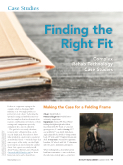
                                Case Studies
Finding the Right Fit
  If there is a signature saying in the complex rehab technology (CRT) industry, it is “No single product is perfect for every client.” Achieving the optimal seating and mobility interven- tion for complex client needs most often requires combinations of vehicles, vehicle settings and components precisely configured for a one-of-a-kind fit.
The goal of a case study, therefore,
is not to offer a blueprint that can be exactly duplicated, but rather to show what worked in a particular scenario for an individual client — with the hope that some aspect of the study can shed light on or inspire an intervention for another client. Got a great case study to talk about? Contact Editor Laurie Watanabe (lwatanabe@1105media.com) to learn how your story can be shared here.
Making the Case for a Folding Frame
Client: Mark Holbert
Primary diagnosis: Double lower- extremity amputation
Equipment: Xenon2 FF (Fixed Front) folding ultralightweight wheelchair;
fixed front with 80° bend; 2" center-of- gravity preset; 0° camber. Seating: 15.7" seat width/19.7" seat depth; fold-down, angle-adjustable back with 1" dump; JAY J3 back, 16" wide and 15" high with foam and shell. Components: Natural-Fit ergonomic handrim; 24" wheels with 5x1.5" aluminum soft roll casters; aluminum anti-tippers.
When working with a client who has lost both lower extremities — one at the knee, the other one entirely gone — your first
  MobilityMgmt.com
MOBILITY MANAGEMENT | AUGUST 2018 19
Complex Rehab Technology Case Studies
 FILE FOLDERS: ISTOCKPHOTO.COM/ KIDDY0265 XENON2 IMAGES COURTESY SUNRISE MEDICAL. RAZ-AT IMAGE COURTESY RAZ DESIGN INC.


